
Quick Answer: What Is HBOT?
What is HBOT? HBOT stands for hyperbaric oxygen therapy, a process where an individual spends time inside a pressurised chamber with increased oxygen availability. These sessions are designed to create a controlled environment focused on relaxation, structured wellness routines, and recovery support.
A hyperbaric chamber gradually increases air pressure above normal atmospheric conditions, allowing oxygen to dissolve more efficiently during the session.
Today, people exploring what HBOT is often include athletes, wellness-focused individuals, professionals, and those interested in structured recovery routines.
What Does HBOT Stand For?
One of the most common questions online is simply: what is HBOT and what does it mean?
HBOT is short for hyperbaric oxygen therapy. The word “hyperbaric” refers to increased air pressure, while “oxygen therapy” refers to the increased oxygen availability experienced during the session.
The process takes place inside a specialised chamber designed to create a calm, pressurised environment.
Although many people search what is HBOT from a medical perspective, modern hyperbaric chambers are also widely explored in wellness and recovery-focused settings.
How HBOT Works
Understanding what HBOT is becomes easier once you understand how pressure and oxygen interact.
Inside the chamber, pressure increases gradually above normal atmospheric conditions. This change allows oxygen to dissolve more efficiently into the bloodstream during the session.
The user remains seated or reclined while the chamber maintains a stable environment. Sessions are generally quiet and uninterrupted, encouraging relaxation and rest.
Most HBOT sessions last between 60 and 90 minutes.
What Does an HBOT Session Feel Like?
People searching what is HBOT often want to know what the actual experience feels like.
For most individuals, sessions feel calm and controlled. As pressure increases, users may notice a sensation similar to changing altitude during a flight. This usually settles quickly as the body adjusts.
During the session, many individuals choose to:
- Relax quietly
- Listen to music
- Read
- Watch content
- Rest or meditate
Once the session ends, pressure gradually returns to normal levels before leaving the chamber.
Why Are More People Exploring HBOT?
Interest in what HBOT stands for has increased significantly in recent years.
Recovery and structured rest have become major priorities across wellness, sport, and performance-focused lifestyles. As people become more aware of recovery routines, hyperbaric oxygen environments are attracting more attention.
The growing popularity of home wellness systems has also contributed to increased awareness. Portable chambers and residential setups have made access easier than before.
Individuals exploring HBOT commonly include:
- Athletes
- Fitness enthusiasts
- Busy professionals
- Wellness-focused individuals
- People interested in structured downtime
HBOT and Recovery Routines
One reason people search what HBOT is because of its association with modern recovery culture.
Athletes and high-performance individuals often explore hyperbaric oxygen sessions alongside broader recovery practices such as:
- Sleep optimisation
- Stretching and mobility work
- Hydration routines
- Massage and physiotherapy
- Cold exposure and contrast therapy
While HBOT is not positioned as a cure or guaranteed solution, it is commonly explored as part of a wider wellness strategy centred around consistency and recovery.
Mild vs High-Pressure Hyperbaric Chambers
Another common question surrounding what is HBOT relates to chamber types.
There are different kinds of hyperbaric chambers available. Some systems operate at lower pressure levels and are often referred to as mild hyperbaric chambers. Others operate at higher pressures in more specialised settings.
Mild systems are commonly used in wellness-focused environments because they are designed around comfort, accessibility, and regular use.
Many home chambers operate below 0.5 bar gauge pressure, keeping them within consumer wellness positioning rather than pressure equipment classification.
Can HBOT Be Used at Home?
A major reason for rising searches around what is HBOT is the increasing popularity of home systems.
Modern home chambers allow users to experience pressurised oxygen sessions without travelling to external facilities. Many systems are portable or semi-portable, making them practical for residential spaces.
Home use appeals to individuals who value:
- Convenience
- Flexibility
- Routine consistency
- Privacy
- Easy scheduling
This accessibility has helped HBOT move beyond niche environments into more mainstream wellness discussions.
Featured Hyperbaric Chamber: The Winslet Hard Shell System
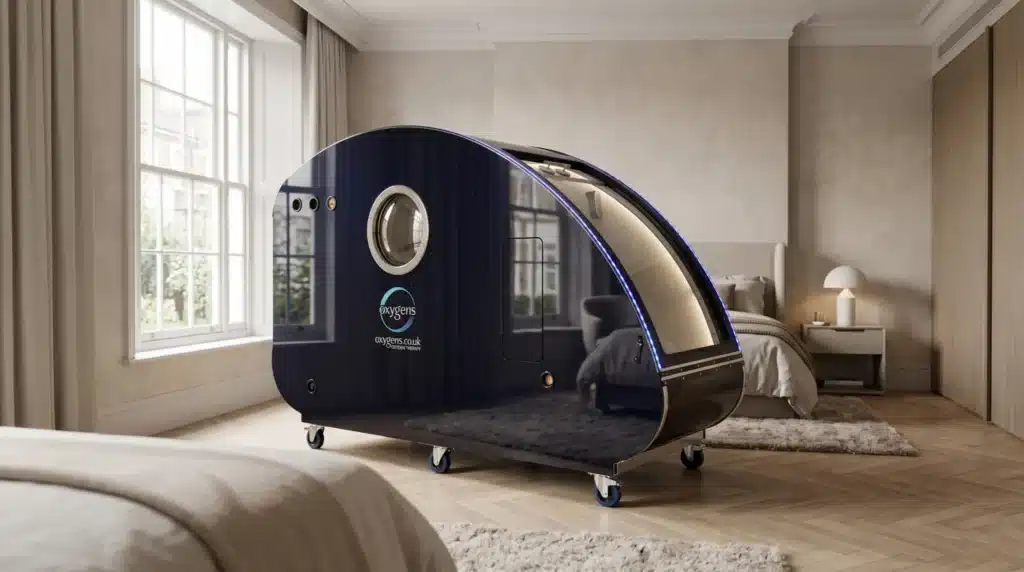
For readers researching what is HBOT and exploring professional-grade chamber systems, the Winslet Hard Shell Hyperbaric Chamber represents one of the most advanced hyperbaric oxygen environments manufactured in the UK.
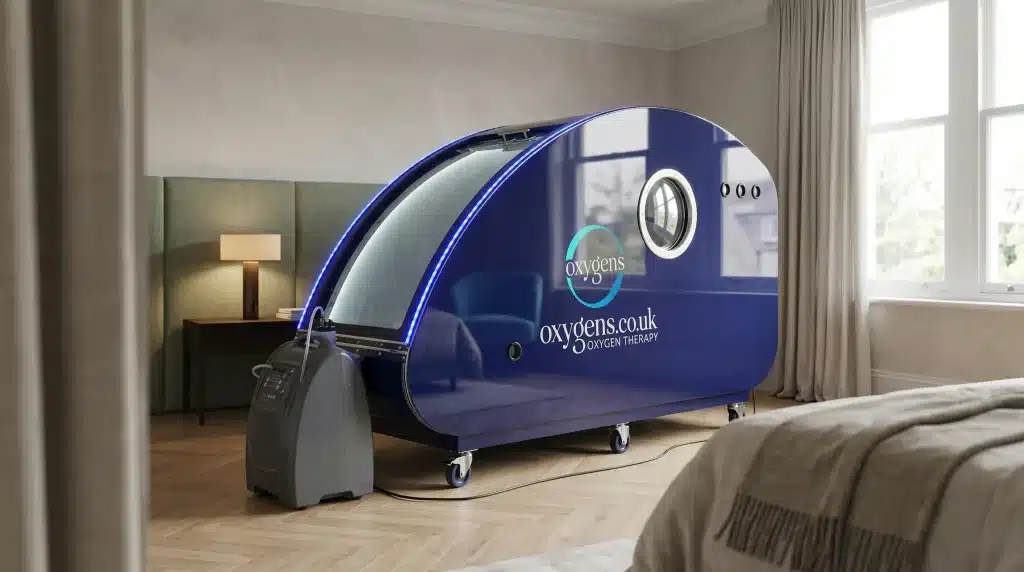
Designed and built by Oxygens, The Winslet is a premium 2.0 ATA hard-shell chamber developed for clinics, wellness centres, and luxury private installations. Unlike portable systems, hard-shell chambers are engineered as rigid pressure vessels, offering enhanced structural integrity, advanced monitoring capabilities, and a professional user experience.
Manufactured in Britain, The Winslet combines pressure-vessel engineering principles, comprehensive safety systems, and long-term durability. Every chamber undergoes independent pressure testing, repeated factory pressure-cycle testing, and documented quality inspections before release.
Key Features
- UK designed and manufactured
- Professional 2.0 ATA operating capability
- Advanced monitoring and control systems
- Independent pressure testing and certification
- Dual pressure-relief valves plus emergency relief system
- Automatic pressure control for smooth operation
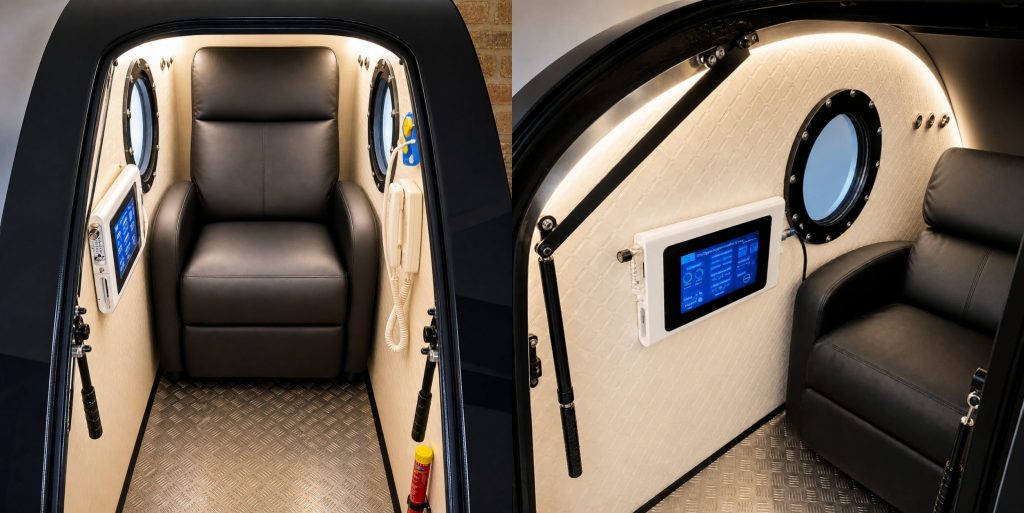
- Integrated fire-protection systems
- Pressure-rated viewing panels
- Full manufacturing traceability
- Up to 10-year or 15,000-hour warranty
Built Around Safety
Safety is a central feature of The Winslet’s design. The system incorporates multiple layers of pressure protection, certified pressure components, emergency depressurisation capability, and reinforced viewing windows engineered beyond standard operating requirements.
The chamber has also undergone independent pressure testing at 14.7 PSI for 60 minutes, helping verify structural integrity under controlled testing conditions.
British Engineering for Long-Term Confidence
Unlike many imported systems, The Winslet is manufactured and supported in the UK, providing direct access to engineering expertise, ongoing support, and documented quality-control processes.
For organisations or individuals seeking a professional hyperbaric oxygen environment with a strong emphasis on safety, engineering quality, and long-term reliability, The Winslet represents the highest tier of the Oxygens chamber range.
Safety and Comfort Features
When researching what is HBOT, safety is naturally an important topic.
Modern chambers include multiple built-in safety systems designed to maintain a controlled environment during sessions.
Common features include:
- Pressure regulation systems
- Relief valves
- Controlled depressurisation
- Airflow management
- Pressure monitoring
Sessions are designed to increase pressure gradually, helping maintain comfort throughout the experience.
Following manufacturer guidance and proper operating procedures is important for safe use.
Why Consistency Matters in HBOT
People asking what HBOT is often also interested in how frequently sessions are used.
Many users view hyperbaric oxygen sessions as part of an ongoing wellness routine rather than isolated experiences.
Consistency is commonly prioritised alongside:
- Rest
- Sleep quality
- Nutrition
- Hydration
- Structured recovery days
This broader lifestyle approach reflects how HBOT is often integrated into modern wellness practices.
HBOT in the UK Wellness Market
Interest in what HBOT is has expanded rapidly across the UK.
More providers now offer home chamber hire, wellness sessions, and portable systems, making hyperbaric oxygen environments more accessible than ever before.
As awareness continues to grow, HBOT is increasingly discussed alongside other recovery-focused wellness technologies.
The combination of convenience, accessibility, and growing public awareness continues to drive interest in hyperbaric oxygen environments across the UK.
Setting Realistic Expectations
It is important to approach what HBOT is with realistic expectations. Hyperbaric oxygen chambers designed for wellness use are not intended for diagnosis, treatment, or prevention of disease.
Instead, they are designed to provide a controlled environment focused on relaxation, structured rest, and general wellbeing routines.
Most individuals exploring HBOT view it as one part of a broader lifestyle focused on recovery, balance, and consistency.
FAQ
HBOT stands for hyperbaric oxygen therapy, where an individual spends time inside a pressurised oxygen chamber designed to create a controlled wellness environment.
The chamber gradually increases pressure, allowing oxygen to become more available during the session.
Most people describe the experience as calm and relaxing, with mild pressure sensations during the beginning of the session.
Modern chambers are generally considered safe when used properly and according to manufacturer guidance.
Yes. Many hyperbaric chambers are designed specifically for home wellness use.
Most sessions last between 60 and 90 minutes.
Yes. Many athletes explore hyperbaric oxygen sessions as part of structured recovery routines.
Wellness-focused hyperbaric chambers are not intended for diagnosis, treatment, or prevention of disease.