
Hyperbaric Oxygen Therapy & Stem Cell Therapy: What Does the Evidence Show?
Stem cell therapy and regenerative medicine are rapidly developing areas of healthcare. At the same time, hyperbaric oxygen therapy, or HBOT, is increasingly being discussed as a supportive therapy that may help prepare the body’s healing environment.
This article explores what the research currently shows, where the evidence is strongest, and why some regenerative medicine clinics combine HBOT with stem cell procedures.
First: HBOT Does Not “Create” Stem Cells
It is important to be accurate. Hyperbaric oxygen therapy does not create stem cells and should not be described as a replacement for stem cell treatment. Instead, research suggests HBOT may influence the body’s existing repair systems, including the mobilisation of certain stem and progenitor cells from the bone marrow into the bloodstream.
Evidence-based summary: HBOT has been shown in published research to increase circulating CD34+ stem/progenitor cells and may support tissue repair by improving oxygen delivery, reducing swelling and supporting new blood vessel formation.
For readers who want to understand Oxygens’ clinical and research-led approach, you can also read more about Dr Sarah Bishop and the wider Oxygens featured provider network.
What Are Stem Cells?
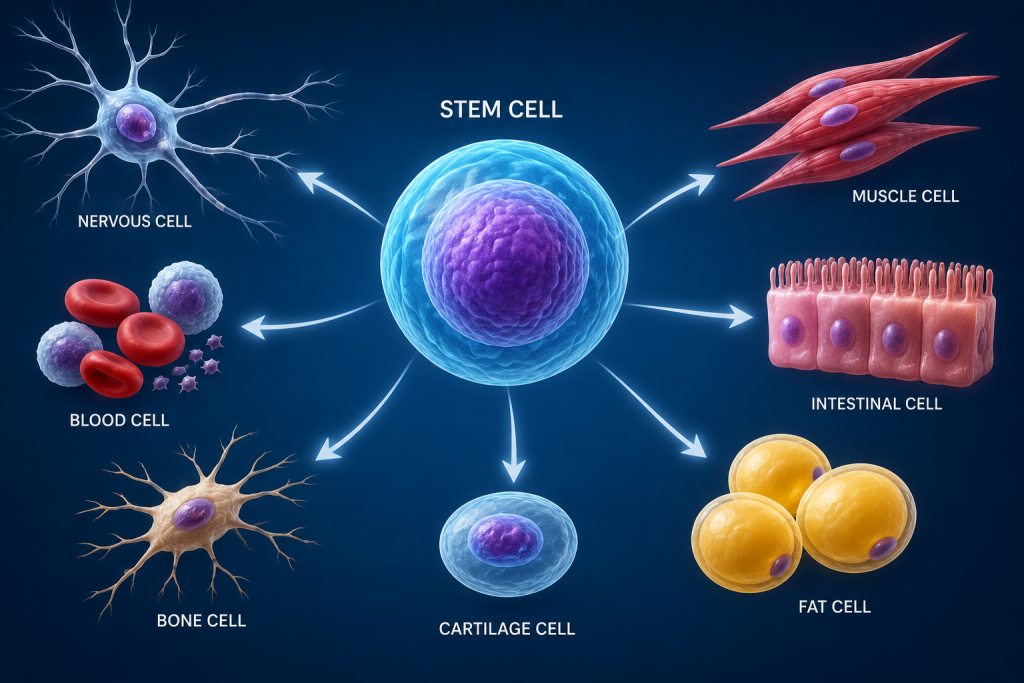
Stem cells are cells with the ability to develop into more specialised cell types. In regenerative medicine, stem cells are often discussed in relation to tissue repair, inflammation, injury recovery and healing.
There are different types of stem and progenitor cells. One group often discussed in HBOT research is CD34+ stem/progenitor cells. These cells are involved in vascular repair and tissue regeneration processes.
In simple terms, stem cell therapy aims to introduce or stimulate repair-focused cells, while HBOT may help improve the environment in which repair takes place.
Can HBOT Increase Circulating Stem Cells?
One of the most cited studies in this area is by Thom and colleagues. The researchers found that exposure to hyperbaric oxygen increased circulating CD34+ cells in humans. A single HBOT exposure doubled circulating CD34+ cells, and after a course of 20 treatments, circulating CD34+ cells increased approximately eightfold.
The proposed mechanism involves nitric oxide signalling, which appears to help mobilise stem/progenitor cells from the bone marrow into the bloodstream.
Why this matters: Stem/progenitor cell mobilisation is one of the key biological mechanisms that may help explain why HBOT is associated with tissue repair and wound healing.
This does not mean HBOT guarantees better outcomes after stem cell therapy, but it does provide a strong biological rationale for why the two are often discussed together.
How Might HBOT Support Stem Cell Procedures?
These mechanisms are why some clinicians use HBOT before or after regenerative medicine procedures. The goal is usually to optimise the healing environment, not to claim that HBOT is a stem cell treatment in itself.
HBOT Before Stem Cell Therapy
Some clinics use HBOT before a stem cell procedure with the aim of improving tissue oxygenation and preparing the body for repair. The theory is that better oxygen availability and improved microcirculation may create a more favourable environment before cells are introduced.
However, timing should always be determined by the treating clinician. The correct protocol may depend on the procedure, the condition being treated, the patient’s medical history and whether hard-shell or soft-shell hyperbaric equipment is being used.
HBOT After Stem Cell Therapy
After stem cell treatment or regenerative procedures, HBOT may be used to support recovery by helping with oxygenation, swelling and tissue repair. In preclinical studies, combining HBOT with stem cell therapy has shown promising results in areas such as wound healing and tissue regeneration.
That said, human clinical evidence remains limited. It would not be accurate to claim that HBOT guarantees improved stem cell survival or better clinical outcomes. The best wording is that HBOT may be used as a supportive therapy within a wider regenerative medicine protocol.
Hard Shell vs Soft Shell Hyperbaric Chambers
Clinical protocols for regenerative medicine often involve higher pressure medical-grade systems. Oxygens manufactures a UK-built hard-shell hyperbaric chamber capable of operating up to 2.0 ATA, designed for professional environments where robust engineering, monitoring and operator control are important.
For home users or wellness-focused recovery, Oxygens also offers hyperbaric chamber rental in the UK, giving clients access to mild hyperbaric oxygen therapy from home. These systems are used for wellness and recovery support and are not medical devices.
What Does the Current Evidence Say?
The strongest evidence is that HBOT can mobilise CD34+ stem/progenitor cells and support biological processes involved in healing, including oxygenation, angiogenesis and inflammatory regulation.
The evidence for using HBOT specifically alongside stem cell surgery or stem cell injections is promising but still emerging. Many studies are laboratory or animal studies, and more high-quality human clinical trials are needed before firm claims can be made.
Important: Oxygens does not provide stem cell therapy and does not make medical treatment claims. HBOT should only be used alongside stem cell or regenerative medicine procedures under the guidance of an appropriately qualified healthcare professional.
Who Might Be Interested in HBOT Alongside Regenerative Medicine?
HBOT may be of interest to regenerative medicine clinics, sports recovery centres, surgical recovery providers and wellness clinics that want to support tissue oxygenation and recovery protocols.
Oxygens works with clinics, private providers, professional sport and wellness facilities across the UK. You can explore examples on our featured providers page.
If you are considering HBOT equipment for a clinic or professional environment, our team can discuss chamber options, installation, training and ongoing support.
References
- Thom SR et al. Stem cell mobilization by hyperbaric oxygen. American Journal of Physiology. https://journals.physiology.org/doi/pdf/10.1152/ajpheart.00888.2005
- Thom SR et al. Vasculogenic stem cell mobilization and wound recruitment in diabetic patients. Wound Repair and Regeneration. https://pmc.ncbi.nlm.nih.gov/articles/PMC3086729/
- Fosen KM, Thom SR. Hyperbaric Oxygen, Vasculogenic Stem Cells, and Wound Healing. Antioxidants & Redox Signaling. https://pmc.ncbi.nlm.nih.gov/articles/PMC4175035/
- Hyperbaric Oxygen Effects on Angiogenesis. StatPearls, NCBI Bookshelf. https://www.ncbi.nlm.nih.gov/books/NBK482485/
- Sunkari VG et al. Hyperbaric Oxygen Increases Stem Cell Proliferation and Angiogenesis. Frontiers in Physiology. https://www.frontiersin.org/journals/physiology/articles/10.3389/fphys.2018.00995/full
Frequently Asked Questions
Does HBOT increase stem cells?
Research has shown that HBOT can increase circulating CD34+ stem/progenitor cells. One landmark study reported an approximately eightfold increase after 20 HBOT sessions.
Is HBOT a stem cell treatment?
No. HBOT is not a stem cell treatment and does not replace stem cell therapy. It may support oxygenation, healing and stem/progenitor cell mobilisation.
Can HBOT be used before stem cell therapy?
Some clinics use HBOT before regenerative procedures to support tissue oxygenation and prepare the healing environment. This should always be guided by the treating clinician.
Can HBOT be used after stem cell therapy?
HBOT may be used after procedures to support recovery, oxygenation and tissue repair. However, strong human evidence proving improved outcomes after stem cell therapy is still limited.
Does Oxygens offer chambers for clinics?
Yes. Oxygens supplies hyperbaric chambers for home, wellness and professional environments, including hard-shell chamber options and rental solutions.
Read the Published Research
The information presented in this article is based on published scientific research examining the relationship between hyperbaric oxygen therapy (HBOT), stem/progenitor cell mobilisation and tissue repair.
One of the landmark studies by Thom et al. demonstrated that repeated HBOT sessions increased circulating CD34+ stem/progenitor cells, suggesting that hyperbaric oxygen may stimulate the body's natural regenerative mechanisms through nitric oxide-dependent pathways. :contentReference[oaicite:0]{index=0}
American Journal of Physiology – Heart and Circulatory Physiology
Read the full study →View the indexed publication, citations and related studies.
View on Europe PMC →Research note: Current evidence demonstrates that HBOT can increase circulating stem/progenitor cells and support biological processes involved in tissue repair. However, evidence supporting HBOT as an adjunct to stem cell therapies in humans remains limited, and further high-quality clinical trials are required. :contentReference[oaicite:1]{index=1}